Learn English Through Books: Practical Tips & Exercises
Why Reading Books is Great for Learning English
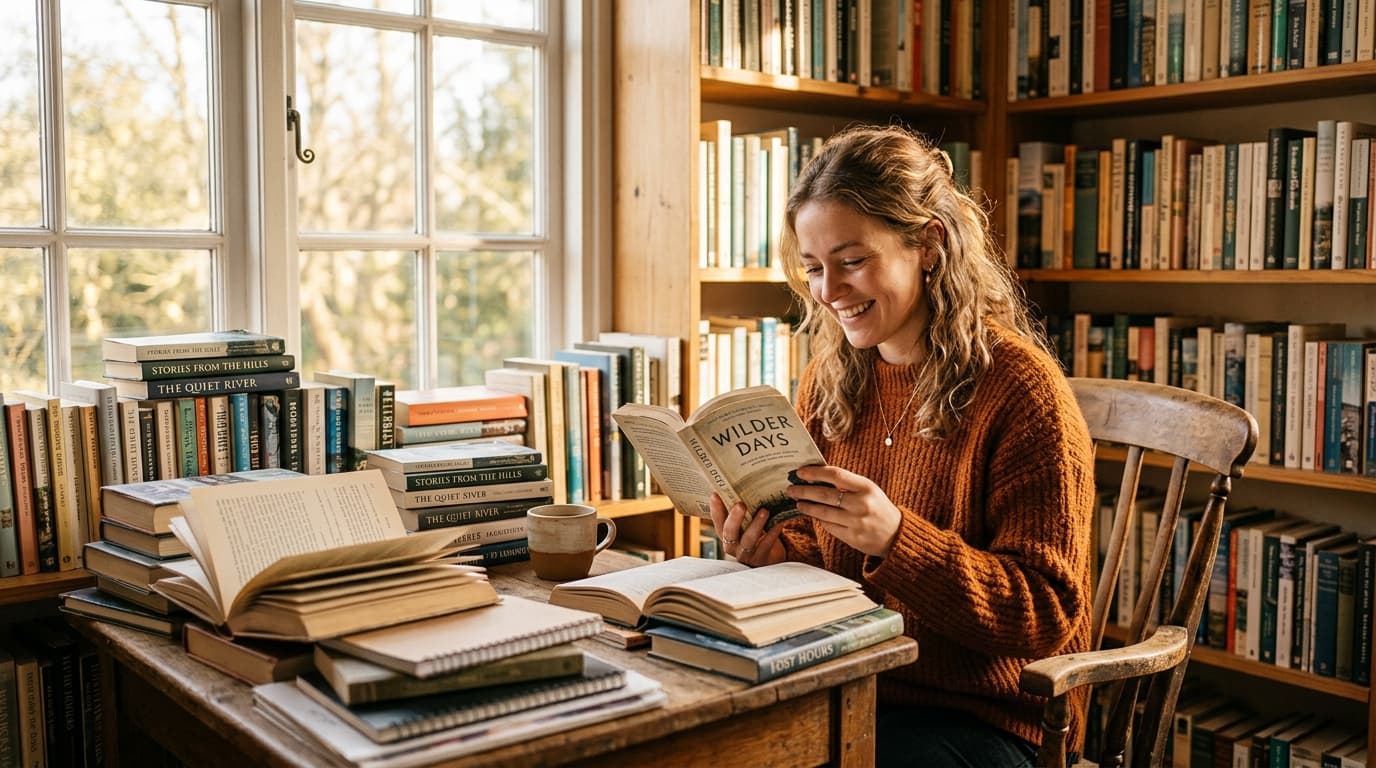
Reading books is one of the best ways to learn English. When you read, you see how words work together. You learn new vocabulary naturally. You also see correct grammar in action. Best of all, reading is fun! You can travel to new worlds, learn new facts, and improve your English at the same time.
Many students feel afraid of reading in a new language. They think it is too hard. But it does not have to be difficult. If you follow some simple tips and do some easy exercises, reading can become your favorite way to study.
The Top Benefits of Reading in English
Why should you spend your time reading? Here are the top benefits for English learners:
- Vocabulary Growth: Books contain more diverse words than everyday conversation. You will learn adjectives, verbs, and expressions that make your English sound more natural.
- Grammar in Context: Studying grammar rules can be boring. But when you read, you see grammar being used correctly. Your brain naturally absorbs how sentences are built.
- Better Writing Skills: Good readers become good writers. When you read often, you learn how to spell words correctly and how to structure paragraphs.
- Cultural Knowledge: Books teach you about the culture, history, and daily life of English-speaking countries. This helps you understand jokes, idioms, and cultural references.
Practical Tips: How to Choose the Right Book
The first step is picking a good book. If the book is too hard, you will feel tired. If it is too easy, you will not learn. Here are some tips to help you choose:
- Choose your level: Look for books that match your English level. For A2 or B1 learners, starting with a native adult book might be too hard.
- Try Graded Readers: These are special books written for English learners. They use simple words and grammar. They are perfect for practice!
- Read what you love: If you like romance, read romance. If you like science fiction, read science fiction. When you enjoy the story, you will want to keep reading.
- Use the 'Five Finger Rule': Open a book to any page. Start reading. For every word you do not know, hold up one finger. If you hold up five fingers before the end of the page, the book is probably too difficult for now.
Practical Tips to Use While Reading
Once you have your book, how should you read it? Here are some practical tips to help you learn more without getting stressed:
- Do not translate every word: This is a very common mistake. If you stop to look up every word in the dictionary, you will forget the story. Try to guess the meaning of the word from the context (the other words around it).
- Read aloud: Try reading one page out loud every day. This helps you practice your pronunciation. It also helps your brain remember the words better.
- Keep a vocabulary notebook: When you see a new word three or four times, write it down. Write the word, the meaning, and the sentence from the book.
- Set a small goal: Do not try to read the whole book in one day. Read for 15 minutes a day, or read just one chapter. Small habits bring big results.
Fun Exercises to Do With Your Book
Reading is great, but active reading is even better. Active reading means you do something with the information. Here are three simple exercises you can do to improve your English.
Exercise 1: Write a Short Summary
After you finish a chapter, close the book. Take a piece of paper and write a short summary. Write 3 to 5 sentences about what happened. Who did what? Where did they go? This helps you practice writing and checks if you understood the story.
Exercise 2: Interview a Character
Choose your favorite character from the book. Imagine you are a journalist on TV. Write down three questions you want to ask this character. Then, write the character's answers. This is a great way to practice asking questions in English.
Exercise 3: Change the Ending
Did you dislike the end of the chapter? Change it! Write a new ending. Use your imagination. This exercise helps you think creatively in English and practice using past tense verbs.
Practice Talking About Books with See Guru
Reading by yourself is wonderful, but talking about what you read is even better! At See Guru, you can find amazing private English tutors. You can read a book and then discuss the plot, the characters, and the new vocabulary with your tutor in a 1-on-1 online lesson.
Your tutor can help you fix your mistakes, improve your speaking confidence, and explain difficult grammar from the book. Start your learning journey today with See Guru!
Frequently Asked Questions (FAQ)
How many pages should I read in English every day?
You do not need to read many pages. It is better to read for a specific amount of time, like 10 to 15 minutes a day. Even reading just one or two pages every day will help you improve if you do it regularly.
Should I read physical books or use an e-reader?
Both are great! Physical books are nice because you can write notes on the pages. E-readers (like Kindle) are very helpful for English learners because you can touch a word to see the dictionary definition instantly.
What are graded readers?
Graded readers are books created specifically for people learning a new language. They are divided into levels (like Level 1, Level 2, or A1, A2, B1). They use simpler vocabulary and grammar so you can enjoy a full story without using a dictionary too much.
Vocabulary
| English | Translation | Example |
|---|---|---|
| Chapter A main division or section of a book. | Chapter | I read one chapter of my book every night before I go to sleep. |
| Plot The main events or the story of a book. | Plot | The plot of this mystery book is very exciting. |
| Character A person, animal, or magical creature in a story. | Character | Harry Potter is my favorite character in the book. |
| Author The person who wrote the book. | Author | J.K. Rowling is the author of many famous books. |
| Fiction A book about made-up stories, not real events. | Fiction | I prefer reading fiction because I love using my imagination. |
| Non-fiction A book about real facts, people, or events. | Non-fiction | She is reading a non-fiction book about the history of space travel. |
| Summary A short description of the main ideas of a text. | Summary | The teacher asked us to write a short summary of the story. |
| To highlight To mark important text with a bright color. | To highlight | I like to highlight new English words with a yellow marker. |
| Context The words around a new word that help you understand what it means. | Context | If you don't know a word, try to guess its meaning from the context. |
| Bilingual Written or spoken in two different languages. | Bilingual | A bilingual book has English on one page and Spanish on the other. |
| Genre A specific type or category of a book, like romance or horror. | Genre | Science fiction is my favorite genre of literature. |
Grammar Tip: Past Simple and Past Continuous in Stories
When you read fiction books, you will see the Past Continuous and the Past Simple tenses used together very often.
Authors use the Past Continuous (was/were + verb-ing) to describe the background scene or an action that was in progress.
They use the Past Simple (verb + ed / irregular verbs) for the main, sudden actions that interrupt the background scene.
- Example 1: The sun was shining (background) when suddenly the monster appeared (sudden action).
- Example 2: While Mary was reading a book, her phone rang.
Next time you read a story, look for these two tenses working together! It is a great way to learn narrative grammar naturally.
Ready to practice these words?
Book a private English lesson on See Guru and practice in real conversation!
Start Learning