Learn English Grammar: Using Past Tenses to Talk About History
Why Learn About History in English?
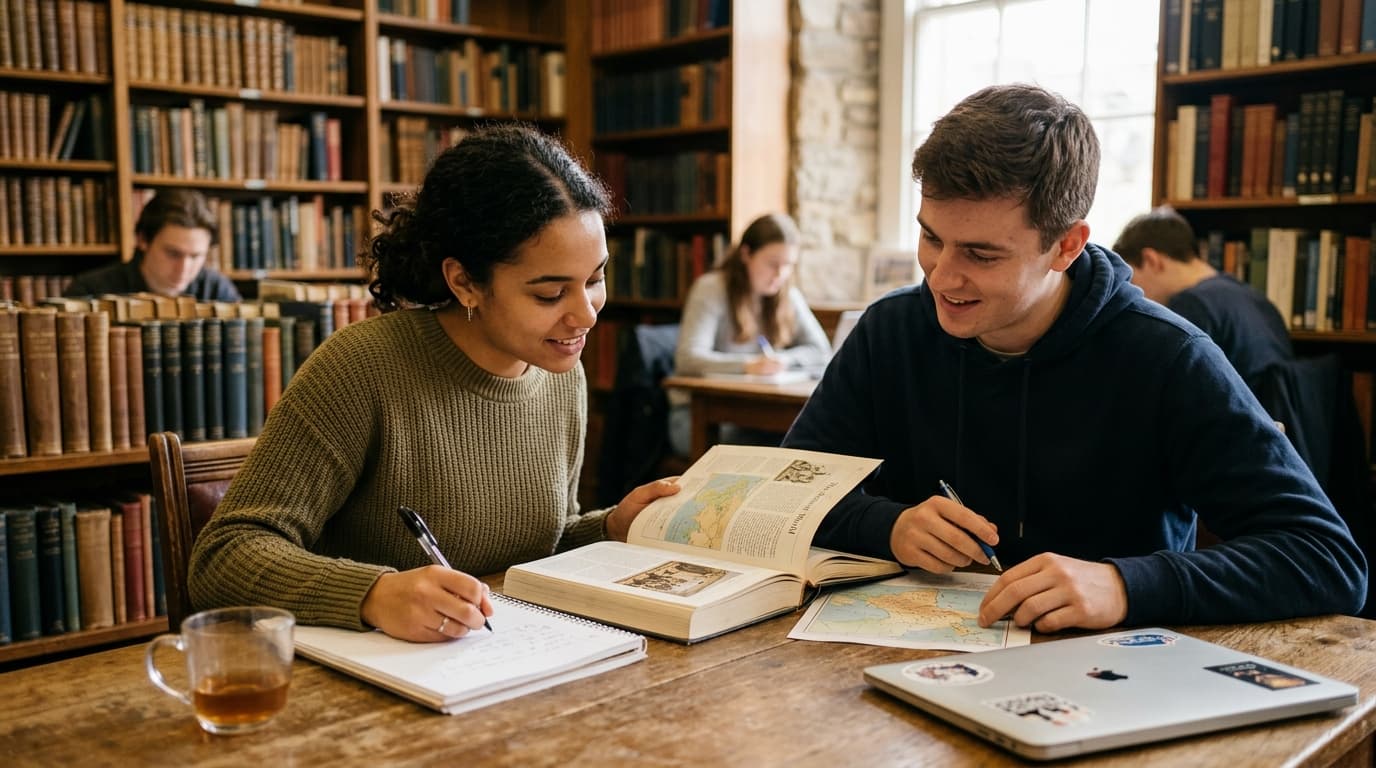
Learning English is not just about memorizing rules from a textbook. It is about communicating ideas, sharing stories, and understanding the world around us. One of the best ways to practice your English is by talking about history. History is full of fascinating stories about ancient civilizations, brave explorers, and amazing inventions.
When you talk about history, you naturally practice past tenses. You also learn exciting new vocabulary that makes your English sound more advanced. If you want to improve your English faster, talking about historical events is a fun and educational method. Plus, a private tutor at See Guru can help you practice these stories in real conversations!
Grammar Focus: Past Simple vs. Past Continuous
To tell a good historical story, you need the right grammar. The two most important tenses for history are the Past Simple and the Past Continuous. Many English learners confuse these two tenses, but they are actually quite simple once you understand the rules. Let's explore how to use them clearly.
1. The Past Simple for Finished Actions
We use the Past Simple to talk about actions that started and finished in the past. These are the main facts of our history story. When you list historical events, you will almost always use this tense.
- Christopher Columbus discovered America in 1492.
- The Romans built long roads across Europe.
- Alexander Bell invented the telephone.
In these examples, the actions are complete. We often use dates or specific times with the Past Simple, like "in 1990," "last year," or "two centuries ago."
2. The Past Continuous for Background Information
We use the Past Continuous (was/were + verb-ing) to describe actions that were happening at a specific moment in the past. It gives us the "background picture" of the story. It tells us what was going on before the main event happened.
- In 1666, a strong wind was blowing through London when the fire started.
- The scientists were studying the ancient artifact for many months.
- While the king was sleeping, the enemy army approached the castle.
3. Using Both Tenses Together
The real magic happens when you use both tenses in one sentence. We often use the Past Continuous for a long background action, and the Past Simple for a short action that interrupts it.
- While the explorers were sailing across the ocean, they found a new island.
- People were sleeping when the volcano erupted.
This grammar rule makes your English sound much more natural and interesting. It helps the listener imagine the scene perfectly.
How Past Tenses Help You in Everyday Conversations
You might think, "I do not want to be a historian. Why do I need to learn this?" The truth is, we use the exact same grammar rules every single day! When you tell your friends about your weekend, you are telling a history story. When you explain a problem at work that happened yesterday, you are using the past tense.
For example, you might say, "While I was walking to work, I saw a beautiful bird." This is the exact same grammar structure as, "While the Romans were building the city, they found a river." By practicing with interesting historical facts, you are actually preparing yourself for normal, daily conversations in English. You are learning how to share your own personal history with the world.
Essential History Vocabulary for English Learners
To talk about the past, you need the right words. Here are some essential history vocabulary words. Try to use them in your next lesson on See Guru!
- Century: A period of 100 years. Example: We are living in the 21st century.
- Ancient: Very, very old; from a long time ago. Example: The ancient Egyptians built the pyramids.
- Empire: A large group of countries ruled by one powerful leader. Example: The Roman Empire was huge and powerful.
- Discover: To find something that existed but nobody knew about. Example: Scientists discovered a new dinosaur bone.
- Invent: To create something completely new for the first time. Example: Thomas Edison helped invent the lightbulb.
- Battle: A fight between armies in a war. Example: Many brave soldiers fought in the famous battle.
- Civilization: A human society with its own culture, science, and rules. Example: The Maya civilization was very advanced in math.
- Artifact: An old object made by humans in the past. Example: The museum has a beautiful gold artifact from Greece.
- Explorer: A person who travels to new and unknown places to learn about them. Example: Marco Polo was a famous explorer.
- Conquer: To take control of a country or place by fighting. Example: The general wanted to conquer the whole continent.
- Decade: A period of 10 years. Example: The 1980s was an interesting decade for popular music.
- Monument: A building or statue built to remember a famous person or event. Example: The Eiffel Tower is a famous monument in Paris.
Let's Practice: A Short Historical Story
Read this short story about the discovery of Pompeii. Notice how we use the vocabulary words and the past tenses together.
Almost two thousand years ago, Pompeii was a busy Roman city. It was part of a great empire. One day in the first century, the people of Pompeii were walking in the streets and buying food. They did not know that danger was near. Suddenly, a huge volcano erupted. While the heavy ash was falling from the sky, it covered the whole city.
For many decades, people forgot about Pompeii. Then, in 1748, an explorer and his team were digging in the ground when they accidentally discovered the ancient city! Because the ash protected the buildings, they found many perfect artifacts. Today, Pompeii is a famous monument to the past. It shows us exactly how an old civilization lived.
When you read stories like this, your brain remembers the grammar naturally. You do not just memorize a rule; you see the rule in action. This is the secret to becoming fluent in English. Try to write your own short story about a famous event in your country's history. Use at least three new vocabulary words and both past tenses!
Improve Your English with See Guru
Did you enjoy this history lesson? Reading stories is a fantastic way to learn English. However, speaking is even more important! At See Guru, you can find a private English tutor who matches your learning style and goals.
Your tutor can help you practice the Past Simple and Past Continuous in real-time. You can talk about your favorite historical events, practice your pronunciation, and build your confidence in a friendly environment. Book a session on See Guru today and take your English to the next level!
Frequently Asked Questions (FAQ)
Why is history a good topic for learning English?
History is great because it naturally forces you to use past tenses. It also introduces you to descriptive vocabulary and helps you practice telling stories in a logical, chronological order. Plus, it is much more interesting than reading boring grammar exercises!
What is the difference between "discover" and "invent"?
To "discover" means to find something that was already there, but nobody knew about it (like an island, a planet, or a dinosaur bone). To "invent" means to create something completely new that never existed before (like the telephone, the airplane, or the internet).
How can I practice past tenses at home?
You can practice by writing a short diary entry about what you did yesterday. You can also read short historical stories in English and highlight all the past tense verbs you find. For speaking practice, tell a friend or your See Guru tutor a story about your childhood.
Vocabulary
| English | Translation | Example |
|---|---|---|
| Century A period of 100 years. | Century | We are living in the 21st century. |
| Ancient Very old; from a long time ago. | Ancient | The ancient Egyptians built the pyramids. |
| Empire A large group of countries ruled by one leader. | Empire | The Roman Empire was huge and powerful. |
| Discover To find something that existed but nobody knew about. | Discover | Scientists discovered a new dinosaur bone. |
| Invent To create something completely new for the first time. | Invent | Thomas Edison helped invent the lightbulb. |
| Battle A fight between armies in a war. | Battle | Many soldiers fought in the famous battle. |
| Civilization A human society with its own culture and rules. | Civilization | The Maya civilization was very advanced in math. |
| Artifact An old object made by humans in the past. | Artifact | The museum has a beautiful gold artifact. |
| Explorer A person who travels to new and unknown places. | Explorer | Marco Polo was a famous explorer. |
| Conquer To take control of a place by fighting. | Conquer | The general wanted to conquer the whole continent. |
| Decade A period of 10 years. | Decade | The 1980s was an interesting decade for music. |
| Monument A building or statue built to remember a person or event. | Monument | The Eiffel Tower is a famous monument in Paris. |
Grammar Tip: Past Simple vs. Past Continuous
Use the Past Simple for finished actions: "The Romans built the Colosseum."
Use the Past Continuous for background actions in progress: "The sun was shining when the battle started."
Use them together for interrupted actions: "While they were traveling, they discovered a new land."
Ready to practice these words?
Book a private English lesson on See Guru and practice in real conversation!
Start Learning