Master English Through Design: Practical Tips & Exercises
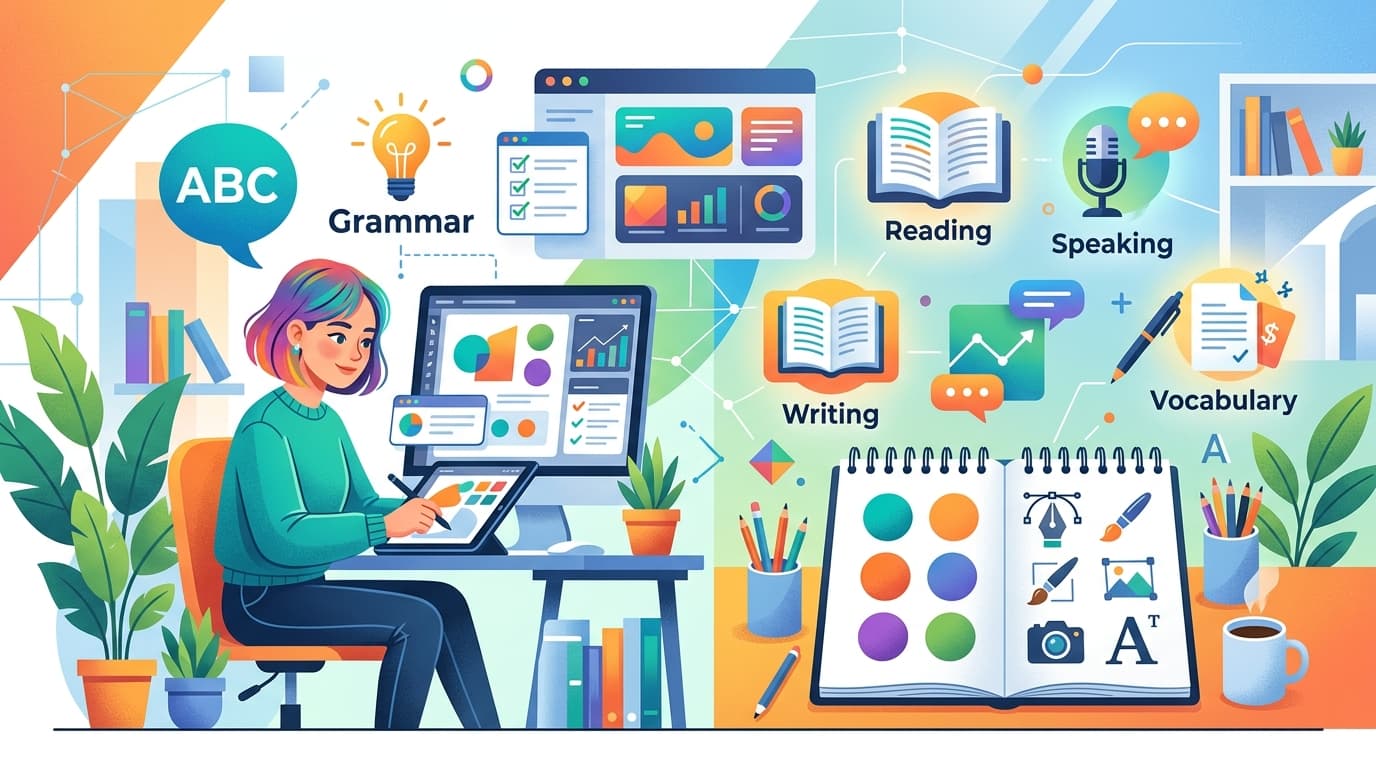
Welcome to Learning English Through Design
Do you love art, creativity, and making things look beautiful? If you do, this article is perfect for you. Design is everywhere around us. It is in the clothes we wear, the websites we visit, and the rooms we live in. But did you know that you can use your love for design to improve your English skills?
When you learn English through a topic you enjoy, it becomes much easier and a lot more fun. Forget about boring textbooks. Instead, you can look at beautiful pictures, watch interesting videos, and talk about your favorite styles. In this post, we will share practical tips for learning English through the topic of design. We will also give you some fun exercises you can try at home. And remember, if you want to practice speaking, you can always find a friendly private tutor on See Guru!
Why Learn English Through Design?
Learning a new language can sometimes feel difficult. However, using design as your topic has many great benefits for A2 and B1 learners:
- It is highly visual: When you look at a picture of a room or a website, you can easily connect English words to the images. This helps your brain remember new vocabulary much faster.
- You learn descriptive words: Design uses many adjectives. You will learn how to describe colors, shapes, sizes, and feelings. This makes your everyday English much better and more colorful.
- It keeps you motivated: Whether you like fashion design, graphic design, or interior design, reading and talking about your hobbies keeps you interested in learning.
Different Types of Design to Explore
Before we look at the vocabulary, let us talk about the different areas of design you can explore in English:
- Graphic Design: This is about creating visual content using computers. You can learn words about logos, posters, and digital art.
- Interior Design: This is the art of making the inside of a room look nice and function well. You can learn words about furniture, lighting, and space.
- Fashion Design: This is creating clothes and accessories. You can practice vocabulary about fabrics, clothing styles, and trends.
- Industrial Design: This is about designing everyday products like cars, phones, or kitchen tools. It focuses on how things work and look.
12 Essential Design Vocabulary Words
Here are some very useful words you should know when talking about design in English. Try to use them in your next lesson on See Guru!
- Sketch: A quick drawing that is not finished. Example: The designer made a quick sketch of the new dress.
- Pattern: A design that repeats itself, like stripes or dots. Example: I love the floral pattern on your shirt.
- Layout: The way things are arranged on a page or in a room. Example: The layout of this magazine is very easy to read.
- Texture: How something feels when you touch it (like smooth or rough). Example: The texture of this blanket is very soft.
- Font: The style of text or letters used in writing or typing. Example: Please use a larger font so I can read the text easily.
- Contrast: The big difference between two things, like black and white. Example: The high contrast between the dark walls and light furniture looks amazing.
- Minimalist: A style that is very simple and uses only what is necessary. Example: He prefers a minimalist design with no extra decorations.
- Function: The purpose of an object or what it is used for. Example: A good chair must have a great design and a good function.
- Palette: A group of colors chosen to be used together. Example: The artist used a warm color palette for the painting.
- Symmetrical: When two sides of something look exactly the same. Example: The front of the building is perfectly symmetrical.
- Innovative: Something that is new, original, and advanced. Example: The new smartphone has an innovative design.
- Aesthetic: Related to beauty and how nice something looks. Example: The coffee shop has a very relaxing aesthetic.
Practical Tips to Practice English with Design
Now that you know some basic vocabulary, here are some practical tips to help you practice your English every day:
1. Watch Design Videos with Subtitles
Go to YouTube or Netflix and find shows about home makeovers, fashion shows, or graphic design tutorials. Turn on the English subtitles. Because you can see what they are doing on the screen, you will easily understand the words they are saying. Write down any new words in a notebook.
2. Read Design Blogs in Simple English
Find websites or magazines about interior design or fashion. Look at the pictures and read the short descriptions. Bloggers usually write in a friendly, conversational style. This is great for A2 and B1 English learners because the sentences are usually short and clear.
3. Change Your App Settings
If you use design apps like Canva, Pinterest, or Adobe, change the language setting to English. You will learn useful action words like "crop", "resize", "background", and "layer" without even trying. This is a great way to learn through habit!
4. Talk to a Tutor on See Guru
The best way to learn a language is by speaking. Book a lesson with a private tutor on See Guru. Tell your tutor, "Today, I want to talk about design." You can show them a picture of your favorite building or your favorite outfit, and practice describing it in English.
Fun Exercises to Try Today
Ready to test your skills? Try these three fun exercises to practice your English through design.
Exercise 1: Describe the Room
Look around the room you are in right now. Take a piece of paper and write five sentences about the interior design. Try to use at least three adjectives. For example: "My room has a minimalist design. The walls are painted in a warm color palette. There is a large window that lets in natural light."
Exercise 2: The Logo Challenge
Think of three famous logos (like Apple, Nike, or McDonald's). Write a short paragraph explaining the design of each logo. Talk about the font, the colors, and the shapes. Why do you think it is a good design? Is it simple? Is it colorful?
Exercise 3: Be a Fashion Designer
Draw a quick sketch of an outfit. Then, write labels next to your drawing in English. Describe the texture of the fabric and the pattern on the shirt. Practice reading your description out loud. You can even present this drawing to your See Guru tutor in your next lesson!
Conclusion
Learning English does not have to be boring. By combining your English studies with your passion for design, you will learn faster and have much more fun. Remember, making mistakes is a normal part of the learning process. If you need help, See Guru is always here for you. Our platform connects you with amazing private tutors for one-on-one online lessons. You can practice talking about design, get help with your grammar, and build your speaking confidence. Start your English journey with See Guru today!
Frequently Asked Questions (FAQ)
Can I use these tips if I am not a professional designer?
Yes, absolutely! You do not need to be a professional designer to appreciate beautiful things. These exercises are for anyone who likes colors, clothing, or decorating their home. Design is for everyone!
What is the best way to remember new design vocabulary?
The best way to remember new words is to use them in your daily life. Make flashcards, draw pictures next to the words in your notebook, or try to use at least three new words every time you speak with your See Guru English tutor.
How can an online tutor help me learn English through hobbies?
A private tutor on See Guru can customize the lesson just for you. If you love design, your tutor can bring articles, pictures, and videos about design to the class. This makes the lesson much more interesting and helpful for your specific goals.
Vocabulary
| English | Translation | Example |
|---|---|---|
| Sketch A quick drawing that is not finished. | Sketch | The designer made a quick sketch of the new dress. |
| Pattern A design that repeats itself, like stripes or dots. | Pattern | I love the floral pattern on your shirt. |
| Layout The way things are arranged on a page or in a room. | Layout | The layout of this magazine is very easy to read. |
| Texture How something feels when you touch it, like smooth or rough. | Texture | The texture of this blanket is very soft. |
| Font The style of text or letters used in writing or typing. | Font | Please use a larger font so I can read the text easily. |
| Contrast The big difference between two things, like black and white. | Contrast | The high contrast between the dark walls and light furniture looks amazing. |
| Minimalist A style that is very simple and uses only what is necessary. | Minimalist | He prefers a minimalist design with no extra decorations. |
| Function The purpose of an object or what it is used for. | Function | A good chair must have a great design and a good function. |
| Palette A group of colors chosen to be used together. | Palette | The artist used a warm color palette for the painting. |
| Symmetrical When two sides of something look exactly the same. | Symmetrical | The front of the building is perfectly symmetrical. |
| Innovative Something that is new, original, and advanced. | Innovative | The new smartphone has an innovative design. |
| Aesthetic Related to beauty and how nice something looks. | Aesthetic | The coffee shop has a very relaxing aesthetic. |
Grammar Tip: Adjective Order for Describing Objects
When describing design elements, you often use more than one adjective. In English, adjectives must go in a specific order. A simple rule to remember is: Opinion, Size, Color, Material.
- Correct: A beautiful (opinion) large (size) brown (color) wooden (material) table.
- Incorrect: A wooden brown large beautiful table.
Try using this rule when describing your favorite room or outfit in your next English lesson!
Ready to practice these words?
Book a private English lesson on See Guru and practice in real conversation!
Start Learning